
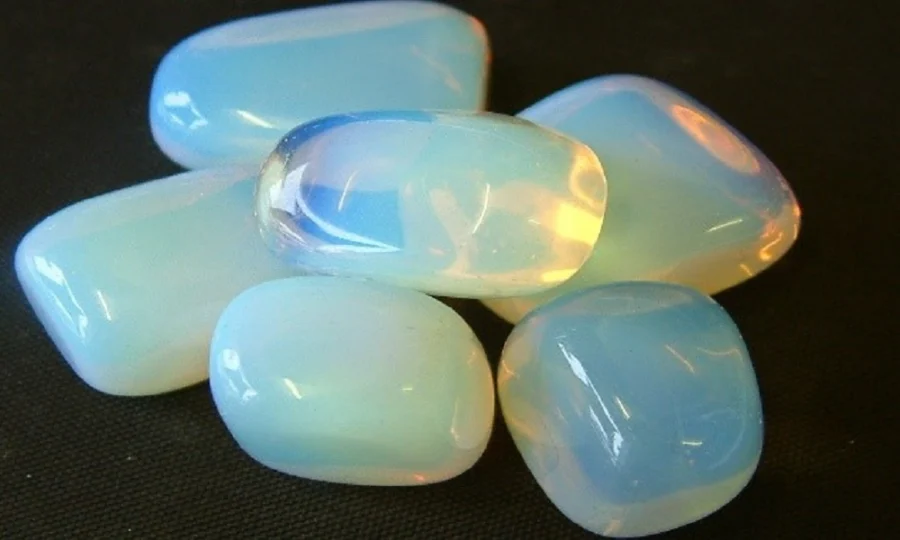
Have you ever picked up a stone and wondered how nature managed to put so many colours into one small piece? From rainbow flashes to deep greens and rich purples, the world beneath our feet is full of minerals and stones that can look almost painted.
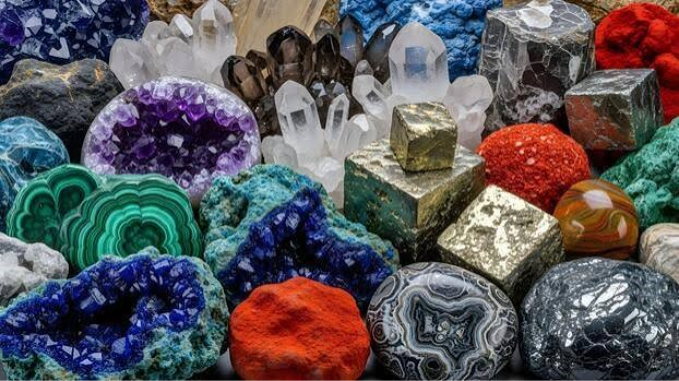
Colorful Minerals and Stones are fascinating not only because of their appearance, but also because their colours often tell a story about their chemical composition, crystal structure, formation, and interaction with light. Some get their colour from trace elements, while others produce spectacular effects because of the way light moves through their internal structure.
In this guide, we look at five remarkable Colorful Minerals and Stones that are popular with collectors, jewellery lovers, students, and anyone interested in geology. We will also explain what makes each one special and where its colours come from.
What are the five most colorful minerals and stones?
The five featured Colorful Minerals and Stones are opal, fluorite, labradorite, malachite, and tourmaline. Each has a different appearance and a different geological story.
Opal is famous for its shifting rainbow-like play of colour. Fluorite can occur in purple, green, blue, yellow, and several combinations. Labradorite is known for flashes that appear when the stone is moved under light. Malachite is recognised by its attractive green bands, while tourmaline occurs in an impressive range of colours.
There is no single scientific ranking for the “most colourful” stone because colour is subjective. However, these five are excellent examples of how minerals and gemstones can display striking natural colours.
1. Opal
Opal is one of the easiest stones to recognise because of its famous play of colour. Depending on the specimen, you may see flashes of blue, green, yellow, orange, or red moving across the surface.
The effect is different from simply having a brightly coloured body. Precious opal contains a highly organised arrangement of tiny silica structures that can interact with light and produce changing spectral colours. Common opal can have attractive body colours without necessarily showing this rainbow-like effect.
This makes opal one of the most fascinating Colorful Minerals and Stones for people who enjoy optical effects. For beginners, Colorful Minerals and Stones are also an easy way to start learning how geology connects science with everyday observation.
Opal is also used in jewellery and collected as a natural specimen. Because different varieties have different patterns and colour effects, two pieces can look completely different even when they are both opal.
2. Fluorite
Fluorite is another strong candidate when discussing Colorful Minerals and Stones. It is especially interesting because it can occur in many colours, including purple, green, blue, yellow, and colourless varieties. Some crystals also show more than one colour in attractive bands or zones.
Fluorite is a calcium fluoride mineral and commonly forms distinctive cubic crystals. Its colour can be influenced by impurities, defects in the crystal structure, and other geological factors.
One reason collectors like fluorite is its combination of crystal shape and colour. A well-formed crystal may have sharp geometric faces together with several shades inside it, creating an almost layered appearance.
Fluorite is relatively soft compared with many jewellery gemstones, so it requires care when handled. Its beauty therefore makes it particularly popular among mineral collectors and people who enjoy displaying crystals rather than wearing them every day.
3. Labradorite
Labradorite may look grey or dark at first, but move it under the light and the stone can suddenly reveal bright blue, green, gold, orange, or violet flashes. This optical effect is called labradorescence.
The colour is not simply a surface coating. It results from the interaction of light with very fine internal layers within the feldspar mineral. Because the effect depends on the angle of light and observation, a labradorite specimen can appear to change as you tilt or rotate it.
Among Colorful Minerals and Stones, labradorite stands out because its most impressive colours can seem to appear and disappear. This makes it particularly popular for polished cabochons, decorative pieces, and mineral collections.
Some exceptional labradorite displays a broad range of colours and is often associated with the trade name spectrolite, especially for vivid Finnish material. The combination of a dark base and bright flashes gives these stones a dramatic appearance.
4. Malachite
Malachite is famous for its intense green colour and distinctive banding. Instead of producing a rainbow effect like opal or labradorite, malachite gets much of its visual appeal from different shades of green arranged in curved or concentric patterns.
Malachite is a copper carbonate mineral. Its green appearance is closely connected to its copper-rich composition. The stone often forms in rounded, botryoidal shapes, and when cut and polished, its natural bands can create beautiful patterns.
Among Colorful Minerals and Stones, malachite is especially easy to identify because its green bands can form swirls, rings, waves, and eye-like patterns. This makes each piece visually different.
Malachite has traditionally been used as an ornamental material and is also collected as a mineral specimen. Its strong colour makes it a popular choice for decorative objects, jewellery pieces, and educational collections.
5. Tourmaline
Tourmaline is not just one colour. It refers to a group of minerals that can occur in a remarkably broad range of colours. Depending on its composition, tourmaline may be black, green, pink, red, blue, yellow, or combinations of these colours.
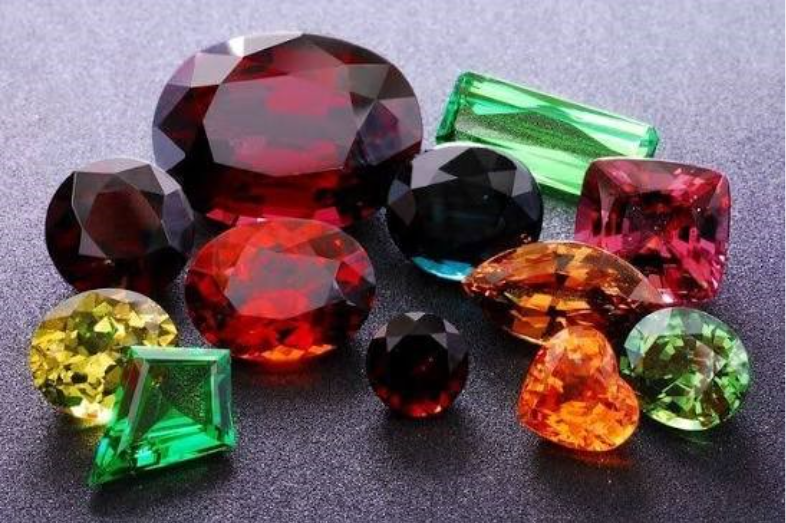
One of the most famous examples is watermelon tourmaline, which can show a pink interior surrounded by green. The colour zoning develops as the crystal grows and the chemical conditions change.
Tourmaline is particularly interesting because small differences in chemical composition can produce major changes in appearance. This gives collectors plenty of variety to explore.
For anyone studying Colorful Minerals and Stones, tourmaline is a useful example of how mineral chemistry can influence colour. It also demonstrates why geology is more than simply identifying attractive rocks: the appearance of a mineral can provide clues about the conditions under which it formed.
How do colorful minerals and stones get their colours?
The colours in Colorful Minerals and Stones can come from several different causes. In some minerals, trace elements or impurities absorb certain wavelengths of visible light and allow other colours to be seen.
For example, copper contributes strongly to the characteristic green appearance of malachite. In other cases, colour can result from structural defects or changes in the crystal lattice.
Optical effects create another category. Labradorite produces its famous flashes because of internal structures that interact with light, while precious opal produces its play of colour through the interaction of light with its microscopic silica structure.
This is why two stones can both look colourful while producing that colour in completely different ways. Comparing Colorful Minerals and Stones in this way helps students see how different scientific processes can create similar visual results.
Understanding the science behind the appearance makes collecting Colorful Minerals and Stones even more interesting.
Which colorful minerals and stones are best for collectors?
The best choice depends on what you want from a specimen. If you enjoy changing colours and optical effects, opal or labradorite may be especially appealing. If you prefer strong geometric crystals, fluorite is worth exploring. bold green patterns catch your attention, malachite is an obvious choice. Tourmaline is ideal for people who want to explore a wide range of natural colours and colour zoning.
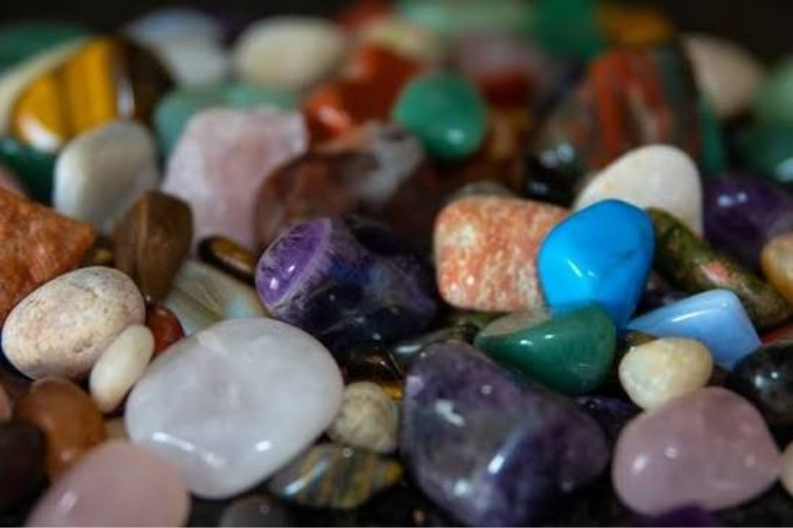
For students, these specimens can also be useful learning tools. They can help demonstrate concepts such as crystal structure, mineral composition, geological formation, light interaction, and mineral identification.
When collecting Colorful Minerals and Stones, appearance should not be the only consideration. Learn the mineral’s name, hardness, composition, locality, and formation process. This turns a simple collection into a practical introduction to geology.
How can students learn more about minerals, stones, and the natural world?
Learning about Colorful Minerals and Stones can be a gateway to broader subjects such as geology, environmental science, chemistry, geography, and earth science. Students who enjoy investigating how natural materials form can develop strong observation, research, and analytical skills.
Finstock Evarsity College provides opportunities for learners to explore flexible education and build useful academic and professional skills. For those interested in understanding the earth, rocks, minerals and natural processes, the college offers the Foundation in Geology and Mineral Sciences (FRGMS) alongside other geology-related learning opportunities. These programmes provide an opportunity to develop knowledge in geological formations, mineral resources and earth sciences.
Students interested in geology and mineral sciences can explore three programmes offered by Finstock Evarsity College: Foundation in Geology and Mineral Sciences, Certificate in Geology and Mineral Sciences and Diploma in Geology and Mineral Science. These programmes introduce learners to geological formations, mineral identification, earth processes and the study of natural resources.
Explore the available courses to find a programme that aligns with your scientific interests and career goals.
What are the five colorful minerals and stones to remember?
The five Colorful Minerals and Stones discussed in this article each have a different reason for standing out.
Opal is admired for its play of colour. Fluorite is known for its broad colour range and attractive crystal forms. Labradorite is famous for its angle-dependent flashes. Malachite stands out through its rich green bands, while tourmaline offers exceptional colour diversity and striking zoning.
Together, these examples show that nature does not use just one method to create colour. Chemistry, crystal structure, geological conditions, and the behaviour of light can all contribute to what we see.
Whether you are a student, collector, jewellery enthusiast, or simply someone who enjoys the beauty of nature, Colorful Minerals and Stones offer an exciting way to learn more about the Earth.
The beauty of Colorful Minerals and Stones goes far beyond their appearance. Each specimen carries information about chemistry, geology, crystal growth, and the natural processes that have shaped our planet.
Opal, fluorite, labradorite, malachite, and tourmaline demonstrate five very different ways that nature can create remarkable colour. By learning how these stones form and why they look the way they do, you can appreciate them from both an artistic and scientific perspective.