
Entrepreneurship is a promising career choice in Kenya because it offers opportunities to earn income, create employment and build independent businesses. With the growth of digital technology, changing consumer needs and increasing demand for goods and services, starting a business has become an attractive option for young people, professionals and aspiring business owners.

However, running a successful business requires more than having a good idea. Entrepreneurs must understand their markets, manage finances, attract customers and adapt to economic changes. So, is entrepreneurship worth pursuing in Kenya, and what opportunities are available?
Why Is Entrepreneurship a Good Career Choice in Kenya?
Yes, entrepreneurship can be a rewarding career because it gives individuals greater control over their income, career direction and business decisions. Unlike traditional employment, business ownership allows individuals to develop their ideas, identify market gaps and create solutions to everyday problems.
Kenya has a growing small business sector, with opportunities in retail, agriculture, technology, transport, hospitality and professional services. According to Kenya’s Country Focus Report 2025 by the African Development Bank, micro, small and medium enterprises contribute significantly to economic activity and employment.
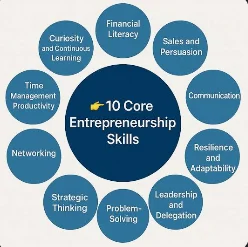
Entrepreneurship also provides an opportunity to become financially independent while creating employment for other people. However, success depends on proper planning, consistent effort and the ability to respond to market demands.
What Business Opportunities Are Available in Kenya?
Kenya offers opportunities across several industries, particularly in sectors experiencing changing consumer needs and technological growth.
1. Digital Business and E-commerce
Online businesses are becoming increasingly popular as more Kenyans use smartphones, mobile payments and social media to purchase products and services. Entrepreneurs can establish online shops, offer digital marketing services, develop websites or sell products through social media platforms.
2. Agribusiness and Food Production
Agriculture remains an important sector of Kenya’s economy. Opportunities include poultry farming, dairy production, fish farming, food processing, horticulture and agricultural supply businesses.
3. Education and Professional Services
Growing demand for skills development creates opportunities in tutoring, consultancy, training and professional services. Individuals with specialised knowledge can establish businesses that provide valuable solutions to students, professionals and organisations.
4. Technology and Innovation
Technology offers opportunities in software development, cybersecurity, financial technology, digital solutions and IT support. Entrepreneurs who understand emerging technologies can develop services that address challenges facing individuals and businesses.
What Challenges Do Entrepreneurs Face in Kenya?
Entrepreneurship in Kenya comes with challenges that can affect business growth, profitability and long-term sustainability. Understanding these obstacles helps aspiring business owners prepare realistic strategies before investing their money.
Some common challenges include:
- Limited access to capital: Many startups struggle to secure affordable financing because of collateral requirements, interest rates and limited financial resources.
- High operating costs: Rent, electricity, transport, taxes and employee expenses can reduce business profits.
- Market competition: Established businesses and new entrants compete for customers, making differentiation important.
- Regulatory requirements: Business registration, licences, taxation and compliance obligations require time and proper planning.
- Limited business management skills: Poor financial management, inadequate marketing and weak planning can contribute to business failure.
The World Bank’s 2025 Enterprise Survey, referenced in Kenya’s Parliamentary Budget Office analysis, identifies high tax rates and limited access to finance among the major obstacles facing businesses in Kenya. Parliament of Kenya+1
How Can You Prepare for a Career in Entrepreneurship?
Developing business knowledge and practical management skills can improve your chances of building a sustainable enterprise. Formal training helps aspiring business owners understand how to identify opportunities, manage resources and make informed decisions.
A relevant option is the Certificate in Entrepreneurship offered by Finstock Evarsity College.
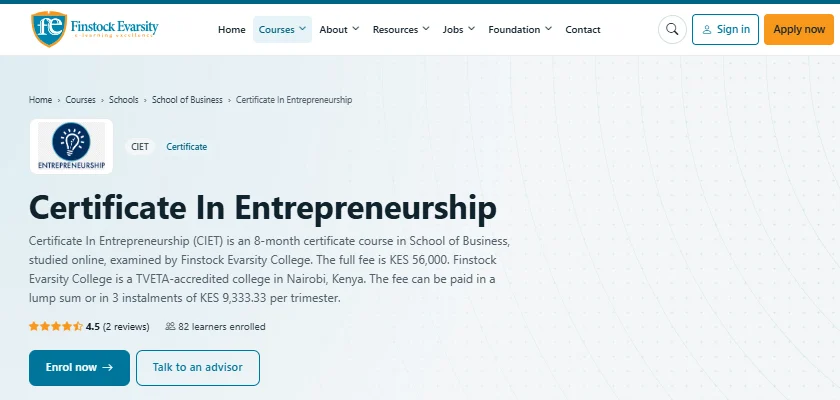
Certificate in Entrepreneurship (CIET)
The programme equips learners with knowledge and skills for starting, operating and managing personal or group business enterprises.
| Course detail | Information |
|---|---|
| Duration | 8 months |
| Total course fee | KES 56,000 |
| Entry requirement | KCSE D- or equivalent |
| Study mode | Online |
| Examining body | Finstock Evarsity College |
What you will learn:
- Business start-up procedures
- Financial accounting
- Business law
- Marketing principles
- Business planning
- Management of business enterprises
Course links
- View Certificate in Entrepreneurship
- Apply for Certificate in Entrepreneurship Course details and fees verified against the official Finstock Evarsity College programme page. FINSTOCK EVARSITY COLLEGE+1
The programme is relevant because entrepreneurship requires practical knowledge of business operations, marketing, accounting and financial planning. These skills can help aspiring entrepreneurs make better decisions, manage business resources and develop sustainable business ideas. If you are considering starting a business or improving your management skills, you can explore the programme and apply through the links above.
Can Entrepreneurship Provide Long-Term Career Growth in Kenya?
Yes, entrepreneurship can offer long-term career growth through business expansion, increased income opportunities and the development of valuable professional skills. Successful business owners can expand into new markets, introduce additional products, employ workers and establish partnerships.
However, sustainable growth requires continuous learning, financial discipline, innovation and an understanding of customer needs. Entrepreneurs must also be willing to review their strategies when market conditions change.
Is Entrepreneurship Worth Pursuing in Kenya?
Entrepreneurship is worth considering for individuals who are willing to take calculated risks, solve problems and commit to building a business. Although challenges such as limited financing, competition and operating costs exist, Kenya continues to offer opportunities across agriculture, technology, retail, education and professional services.
The key to success is combining a viable business idea with proper planning, financial management and relevant business skills. With the right preparation, entrepreneurship can become more than a source of income; it can develop into a sustainable career and contribute to Kenya’s economic growth.