
In today’s digital world, organisations rely on information systems to manage their operations, protect sensitive data, and make important business decisions. From banks and hospitals to government offices and private companies in Kenya, information security and effective IT controls have become increasingly important. But how do organisations ensure their systems are secure, reliable, and operating as expected? The answer lies partly in information systems auditing.
A CISA Course can help learners develop valuable knowledge in information systems auditing, IT governance, risk management, and cybersecurity controls. Whether you are a student interested in technology, an IT professional looking to advance your career, or an individual exploring opportunities in information security, understanding these skills can give you a clearer picture of the field.
At Finstock Evarsity College, learners can explore professional development opportunities that support their career goals. Before choosing a training programme, it is important to understand the practical skills associated with information systems auditing and how they can be applied in the workplace.
In this article, we explore five essential skills you can gain through a CISA Course, why they matter, and how they can support your professional development in Kenya and beyond.
1. What information systems auditing skills can you develop?
One of the main areas covered by a CISA Course\ is the process of evaluating an organisation’s information systems. Information systems auditors examine whether technology systems are working properly, whether procedures are being followed, and whether controls are strong enough to protect information.
You can learn how to review system processes, gather audit evidence, document findings, and identify weaknesses that need attention. For example, an auditor working with a Kenyan SACCO may check how member records are accessed, whether transactions are properly logged, and whether staff follow approved procedures.
A CISA Course also helps learners understand why audit evidence must be accurate, relevant, and properly documented. A CISA Course is most useful when learners connect concepts to realistic workplace scenarios. These skills support accurate reporting and help organisations make informed decisions.
They are useful for people interested in IT audit, compliance, internal controls, and technology assurance.
2. How can a CISA Course improve your IT risk management skills?
Every organisation faces technology-related risks. These may include unauthorised access, data loss, system downtime, weak passwords, or errors during system upgrades. Risk management involves identifying these threats, assessing their potential impact, and recommending ways to reduce them.
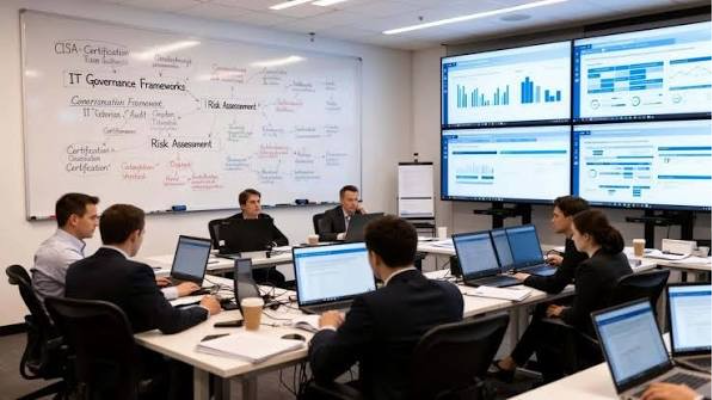
Through a CISA Course, learners can build an understanding of how to assess IT risks and determine which controls may help address them. This includes considering the likelihood of a risk occurring, the consequences for the organisation, and the steps required to reduce exposure.
A CISA Course can also encourage a structured approach to prioritising risks. For instance, a business that stores customer details online needs clear access rules, reliable backups, and a plan for responding to incidents. Risk management skills help professionals ask the right questions and support practical, proportionate solutions rather than waiting for a problem to happen.
3. What will you learn about IT governance and management?
IT governance helps ensure that technology supports an organisation’s objectives, resources are used responsibly, and decisions are properly monitored. It connects technical activities with business priorities and accountability.
A CISA Course introduces learners to the importance of policies, defined responsibilities, performance monitoring, and management oversight. You can develop the ability to assess whether IT projects align with organisational goals and whether management has appropriate processes for evaluating technology decisions.
A CISA Course can help connect governance principles with everyday technology decisions. This knowledge is relevant in both public and private organisations. For example, when a company invests in new accounting software, governance practices help establish who approves the purchase, how success will be measured, and how the system will be monitored after implementation.
4. How can you strengthen your information security and control skills?
Information security is about protecting data and systems from unauthorised access, misuse, disruption, and loss. Strong controls can include user permissions, multi-factor authentication, regular software updates, secure backups, and staff awareness training.
Studying a CISA Course can help you understand how security controls are assessed and why they need to be reviewed regularly. You may learn to look for gaps between an organisation’s security policies and its actual practices, then document the issues for appropriate follow-up.
The control-assessment concepts explored in a CISA Course are relevant wherever confidential information must be protected. Imagine an employee who can access financial records that are unrelated to their role. Reviewing access permissions can help identify this weakness and support better protection of confidential information.
These skills are valuable in organisations that handle customer details, financial data, medical records, or other sensitive information.
It is important to remember that auditing and cybersecurity are related but distinct areas. Information systems auditing evaluates controls and provides assurance; it does not replace the work of security engineers or incident response specialists.
5. What problem-solving and reporting skills can you gain?
Technical knowledge is only part of effective auditing. Professionals also need to analyse evidence, think critically, communicate findings clearly, and recommend realistic improvements.

The reporting skills practised in a CISA Course can be applied to many workplace situations. For example, rather than simply stating that a system has weak access controls, a useful report explains the potential business impact and recommends practical steps such as reviewing user permissions and establishing regular access checks.
These communication and problem-solving skills can be useful in audit teams, compliance roles, risk departments, and wider business settings.
Who should consider studying a CISA Course?
A CISA Course may interest IT professionals, systems administrators, auditors, risk and compliance staff, and learners who want to understand how organisations assess technology controls. It can also help people explore whether information systems auditing fits their longer-term career plans.
However, a course of study and the professional CISA certification are not necessarily the same thing. The Certified Information Systems Auditor (CISA) certification is awarded by ISACA and has its own eligibility and examination requirements. Before enrolling, check the programme’s syllabus, entry requirements, learning format, fees, and whether it prepares you for the certification exam or provides a different form of training.
How can you choose the right training institution?
If you are considering a CISA Course, compare the course content, trainer experience, student support, assessment approach, and flexibility of the learning schedule. These details are particularly important if you are balancing studies with work or other responsibilities.
When comparing institutions, review the course content, trainer experience, student support, assessment approach, and flexibility of the learning schedule.
Finstock Evarsity College is one institution you can explore when researching learning opportunities. Contact the college directly to confirm the current availability, curriculum, delivery method, fees, and certification or examination preparation offered for the programme you want to pursue. Comparing these details helps you make a decision based on your goals and circumstances.
What career opportunities can these skills support?
The knowledge developed through a CISA Course may complement practical experience and other relevant qualifications. Skills in auditing, risk assessment, governance, security controls, and reporting may support career pathways such as:
- IT audit assistant
- Information systems auditor
- Risk and compliance analyst
- IT controls specialist
- Technology assurance professional
Actual opportunities depend on an employer’s requirements, your experience, your qualifications, and any relevant professional certification.
In Kenya, organisations across financial services, telecommunications, healthcare, government, and other sectors use digital systems and need effective controls. Building relevant knowledge can help you prepare for these roles, but no course can guarantee employment or a particular salary.
Is a CISA Course worth exploring?
As organisations become more dependent on technology, the ability to evaluate systems, understand IT risks, assess controls, and communicate findings remains valuable. A CISA Course can help you build a foundation in these areas and understand how technology assurance contributes to responsible business operations.
Before making a decision about a CISA Course, compare course details and ensure the programme matches your experience and career plans. You can begin by exploring the learning opportunities available at Finstock Evarsity College and asking for current information about the relevant programme.
If you are also interested in understanding crime, investigations, fraud, and related issues, consider exploring criminology courses at Finstock Evarsity College. Reviewing your options can help you choose a learning path that aligns with your interests and future goals.